

What Slows Mission Authorization and Deployment

Inherited CVE Backlogs
Vendor base images and open-source components introduce thousands of vulnerabilities before mission software even reaches development.

Gaps in Continuous Evidence
Security teams struggle to maintain consistent vulnerability and configuration evidence required for federal security reviews.

Security Baseline Drift
CIS, DISA STIG, and agency baselines often drift across development, staging, and production environments.
How RapidFort Reduces Mission Software Risk
Prioritize True Risk with Analyzer and Profiler Intelligence



Start Secure with Curated Near-Zero CVE Foundations
Continuously Reduce Exposure with Optimizer and CART
Outcomes Mission Programs Can Rely On

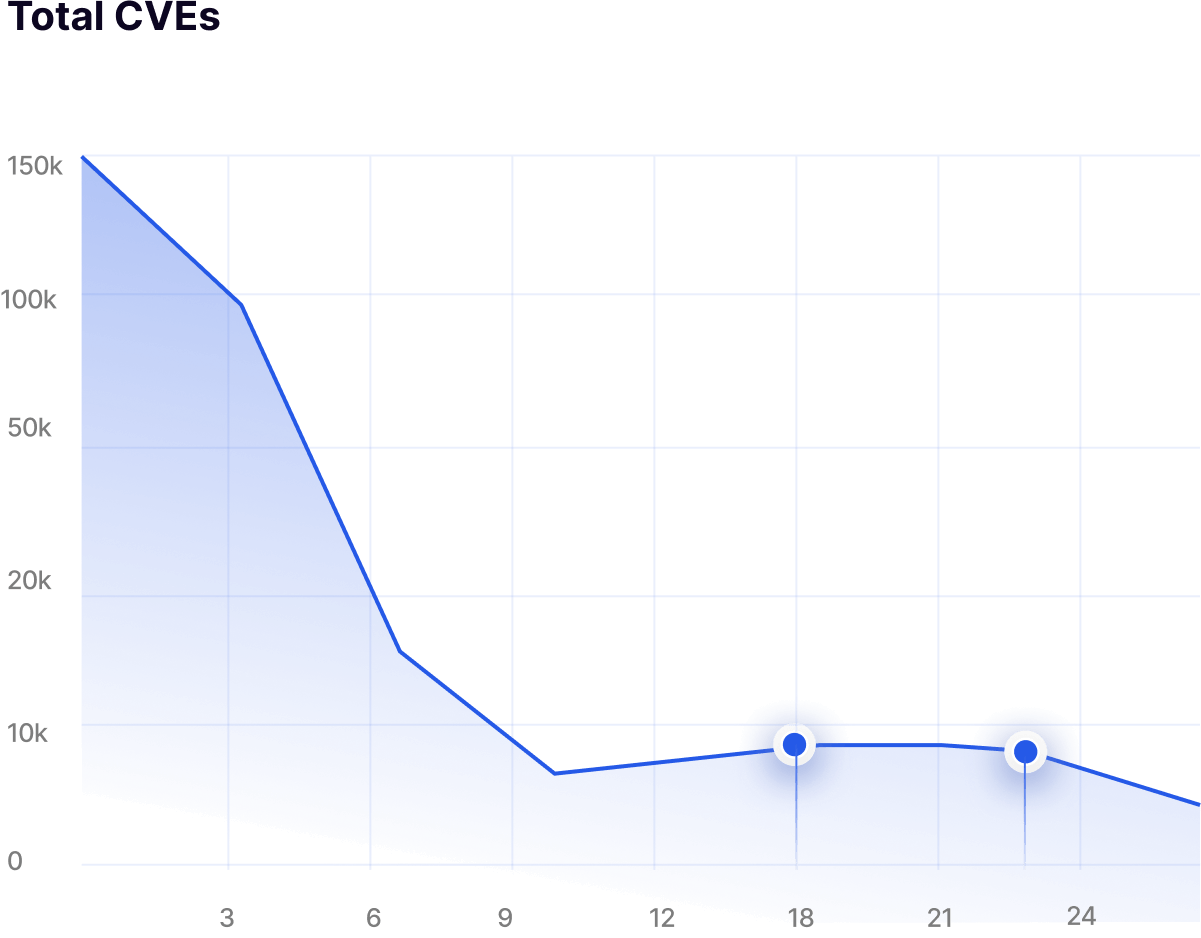
Up to 99.9% CVE reduction
Achieved through hardened base images and automated attack surface reduction.

Up to 90% attack surface reduction
Delivered by removing unused binaries and dormant runtime components.

Faster audit preparation
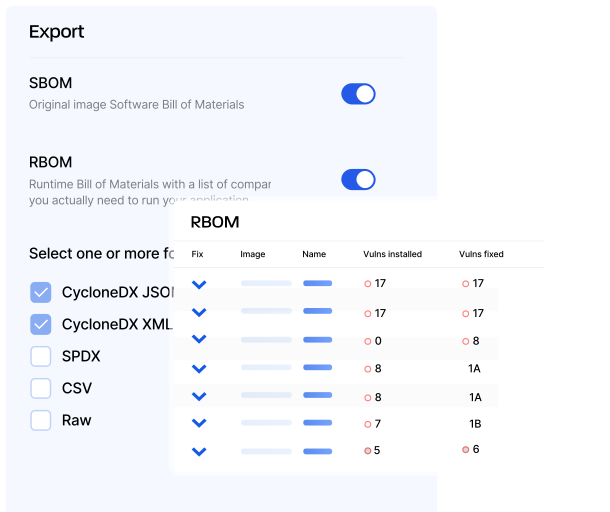
SBOM, RBOM, and configuration evidence remain continuously ready for review.

About 60% less manual remediation effort
Automation replaces repetitive vulnerability triage, exception handling, and patch cycles.
Regulatory Evidence Built Into Every Release

CMMC 2.0 and NIST 800-171
Continuous vulnerability visibility and hardened container foundations support secure software delivery for defense contractors.

FedRAMP, StateRAMP and CRA Readiness
Hardened container images and vulnerability visibility strengthen federal and EU cloud security posture.

NIST 800-53 and FISMA-Aligned Systems
Provide structured vulnerability evidence supporting federal risk management frameworks.

ATO and Zero Trust Initiatives
Reduce software attack surface and strengthen software supply chain security across mission systems.
Frequently Asked Questions
Answers to Your Most Common Questions


