

Why AI Infrastructure Accumulates Vulnerability Risk

Dependency Sprawl
AI frameworks, Python libraries, and container base images introduce thousands of transitive dependencies.

Rapid Iteration Cycles
Frequent model updates and pipeline changes make vulnerability remediation difficult to keep up with.

Limited Runtime Visibility
Security teams lack insight into which components actually execute in production AI workloads.
How RapidFort Reduces AI Software Risk
Prioritize True Risk with Analyzer and Profiler Intelligence



Start Secure with Curated Near-Zero CVE Foundations
Continuously Reduce Exposure with Optimizer and CART
Outcomes AI Teams Can Rely On

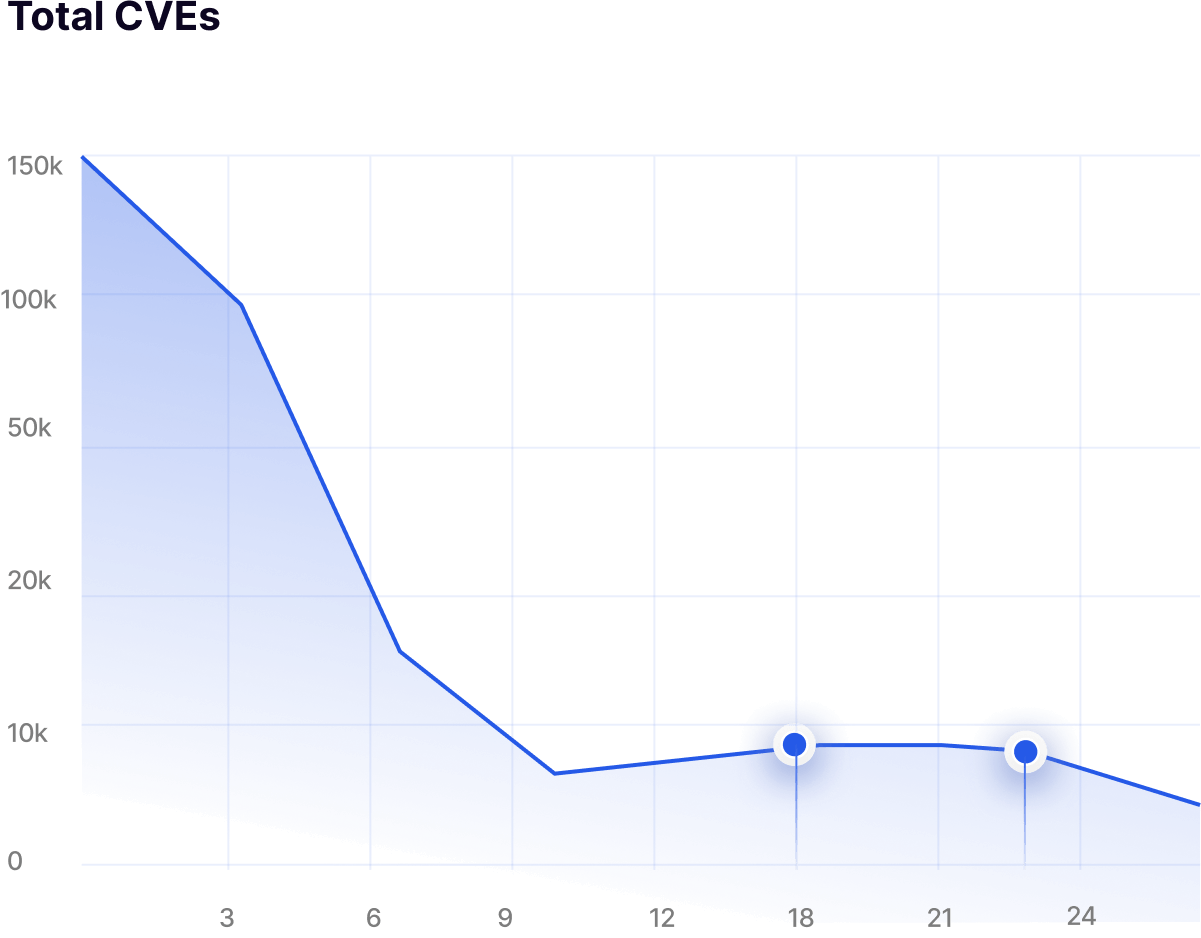
Up to 99.9% CVE reduction
Achieved through hardened base images and automated attack surface reduction.

Up to 90% attack surface reduction
Delivered by removing unused binaries and dormant runtime components.

Faster audit preparation
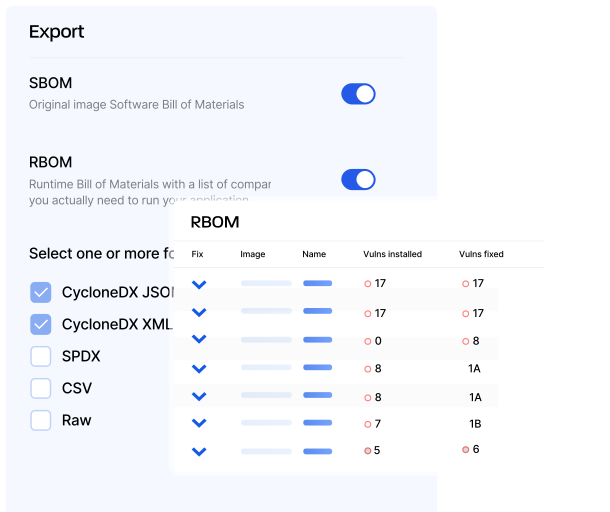
SBOM, RBOM, and configuration evidence remain continuously ready for review.

About 60% less manual remediation effort
Automation replaces repetitive vulnerability triage, exception handling, and patch cycles.
Security Evidence Built Into Every Release

SOC 2 Type II Readiness
Continuous vulnerability visibility and hardened container foundations support modern AI platform governance.

ISO/IEC 27001 Alignment
Secure container foundations help maintain consistent infrastructure security controls.

Global Compliance-Ready Cloud Environments
Hardened images and vulnerability visibility support FedRAMP, cATO, CMMC, CRA, NIS2, and SOC 2 regulated deployments in cloud environments.

Platform Trust and Security Reviews
Provide security artifacts and software transparency needed for enterprise AI platform approval.
Frequently Asked Questions
Answers to Your Most Common Questions


