Top Minimus Alternatives 2026: Hardened Container Images
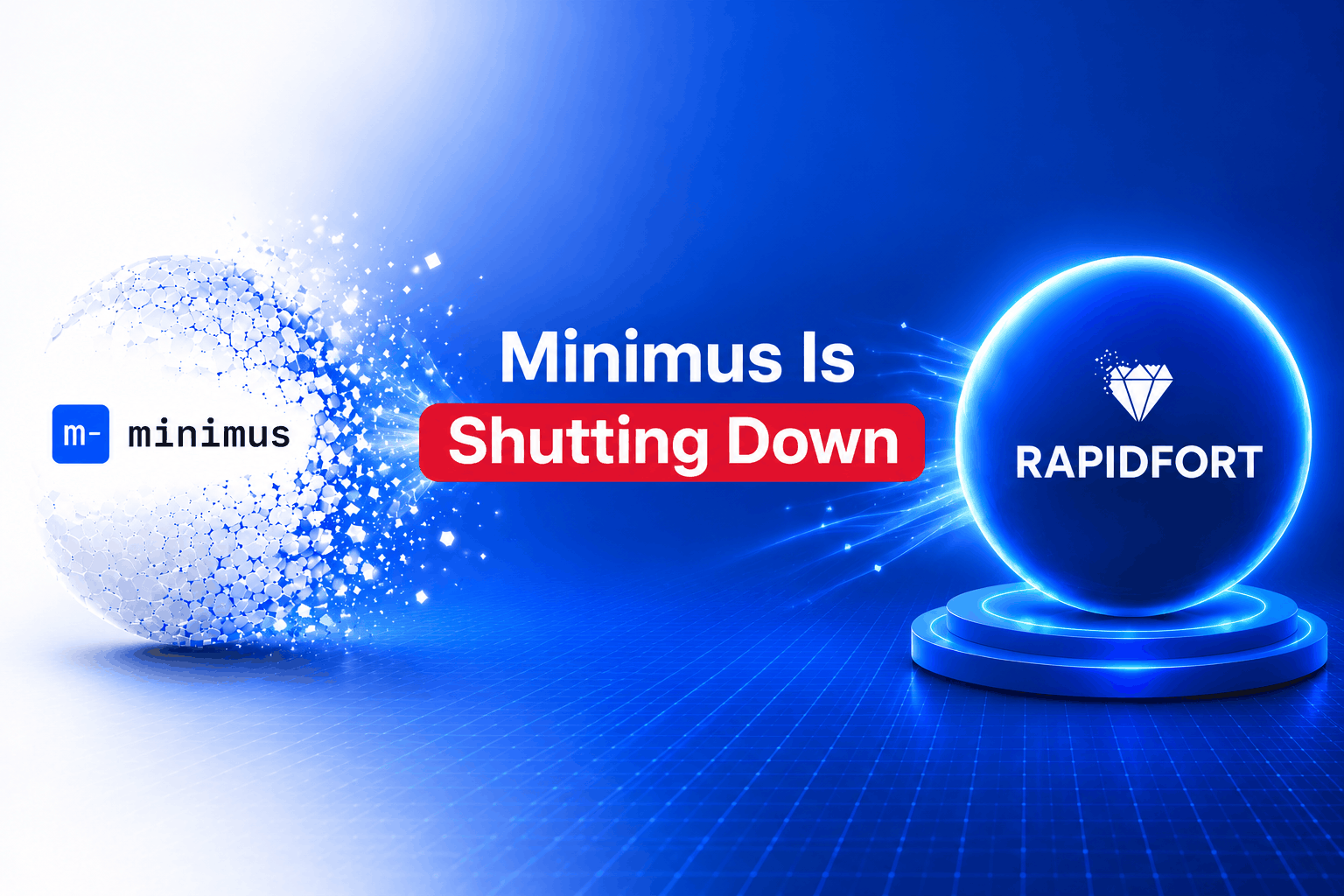

Minimus is ending operations and its registry goes offline on October 22, 2026. The best replacement for most teams is RapidFort Curated Images: tens of thousands of hardened, near-zero CVE images on standard LTS distributions, FIPS-validated, STIG and CIS benchmarking, published 7/14-day remediation windows, and no-cost migration support. The other four options, Chainguard, Echo, Docker Hardened Images, and Aikido, are also compared below.
In this article: Key dates · Our recommendation · Comparison table · Platform decision · How to evaluate · The 5 alternatives · Migration steps · FAQ
Minimus shutdown: key dates
- August 24, 2026. Minimus entered a maintenance period that runs until the shutdown date.
- August 27, 2026. Echo announced it had acquired key Minimus assets, including technology, technical data, security integrations, and customer relationships.
- October 22, 2026. The Minimus registry (reg.mini.dev) is scheduled to go offline. Images already cached on your nodes or mirrored to your own registry will keep running. Any deployment that pulls from reg.mini.dev after that point will fail. No further updates will ship.
The acquisition does not move the deadline. Minimus's notice says no further updated images will be provided. Whichever vendor you choose, you will be moving to a different set of images.
The best Minimus alternative: RapidFort Curated Images
Every option in this comparison gives you hardened images. Plus, we go beyond the image and also cover which components your workload actually runs, and the evidence your auditors ask for, all in the same platform.
For the migration itself, Curated Images make the move off Minimus straightforward:
- Coverage. Tens of thousands of images spanning major versions, minor versions, and older releases. Traditional roll-forward catalogs patch only the newest release, leaving teams pinned to older versions waiting for fixes or missing them entirely. In contrast, we patch older versions as well.
- No new operating system. Ubuntu, Debian, Red Hat, and Alpine, with no proprietary base. Curated Images are drop-in replacements for upstream images, pin-for-pin compatible with existing CI/CD pipelines. If you are coming from a distroless Minimus base, expect a functional test pass, since the LTS image includes components that MinimOS stripped out. That is a test cycle, not a re-baseline.
- Attested compliance. Hardened to NIST 800-70, FIPS 140-3 validated, STIG and CIS benchmarking, DoD Iron Bank support, and DISA-validated OS. Supports FedRAMP, cATO, CMMC, SOC 2, PCI DSS, NIS 2, CRA, and SLSA. As of October 2025, 40 of our customers had achieved FedRAMP authorization or ATO using the platform and Curated Images.
- Published remediation windows. Critical CVEs are remediated within 7 days and everything else within 14, including on older versions.
- Free migration. No-cost assistance for Minimus customers and for organizations running a Minimus trial or evaluation. We inventory your Minimus usage, map it to equivalent Curated Images, and move you before October 22.
Minimus alternatives compared
| Foundation | Catalog size | Compliance | Beyond the image | |
|---|---|---|---|---|
| RapidFort | Standard LTS distros: Ubuntu, Debian, Red Hat, Alpine | Tens of thousands of images, including minor and older versions | FIPS 140-3 validated, STIG and CIS benchmarked, DoD Iron Bank support, DISA-validated OS, BOD 26-04 compliant live remediation clocks | Intake, build, and runtime: vulnerability analysis, runtime profiling, automated hardening, compliance evidence, and curated open-source libraries |
| Chainguard | Wolfi / Chainguard OS, built from source | Not stated | FIPS variants on Chainguard's CMVP-validated provider, DISA STIG hardening | Libraries, VMs, Helm charts, and OS packages |
| Echo | Rebuilt from source, Echo's own artifacts | Hundreds of FIPS and STIG images | FIPS-validated, STIG-hardened | Libraries, VMs, Helm charts, and OS packages |
| Docker Hardened Images | Standard Debian and Alpine | 1,000+ images | FIPS-validated and STIG-aligned variants on paid tiers only | Helm charts, Extended Lifecycle Support add-on |
| Aikido Security | Patches your existing base in place | 2,000+ images | Company-level SOC 2, ISO 27001, ISO 42001; FedRAMP: implementing | Broader security platform: code, cloud, attack, and protect products |
Replacing Minimus is a platform decision, not an image swap
A hardened image addresses one layer: the CVEs you inherit from the operating system and runtime before you write a line of code. (Hardened means packages patched to current fixes, configuration locked down, and the image rebuilt as new vulnerabilities appear.) That is a significant share of the total, which is why hardened images matter. It leaves three other layers untouched:
- The components you never execute. A standard hardened base image cannot detect what your workload actually executes. Many container images include libraries and binaries that your application never actually uses. These unused components still introduce unnecessary vulnerabilities (CVEs) and expand your attack surface.
- The libraries you add. Application dependencies from npm, PyPI, Maven, and the rest are outside the base image and need their own patched, malware-scanned supply.
- The evidence you owe. SBOMs and VEX documents are the minimum. An ATO package, a FedRAMP ConMon (Continuous Monitoring) cycle, or a CMMC assessment needs benchmark results, remediation reporting, and continuously current artifacts, mapped to the framework you are certified against.
Our platform covers all three, across the lifecycle:
- Intake. Curated near-zero CVE images and malware-scanned open-source libraries replace the components you would otherwise inherit.
- Build. Vulnerability analysis across images, registries, and CI pipelines generates the SBOM, and unused components are removed automatically without code changes.
- Runtime. Profiling records what the application actually executes, producing a runtime inventory (RBOM®) that is distinct from the SBOM's list of everything present. That inventory drives further hardening.
- Across all three. Security benchmarks are compiled into audit-ready evidence for ATO, NIST, FedRAMP, CMMC, and other frameworks.
The platform continuously eliminates up to 99.9% of CVEs and up to 90% of software attack surface without code changes. Runtime profiling and component removal are optional layers; nothing about adopting Curated Images requires you to profile a workload.
When you choose a Minimus replacement, you are also deciding where the ongoing maintenance and compliance burden will rest. With an image-only vendor, nearly all of that operational work remains your responsibility.
How to evaluate a Minimus alternative
- Does the catalog cover the exact versions you run? Not just latest. Check minor versions, older releases, and every tag you have pinned against your image inventory.
- Is the foundation a standard distribution or a vendor operating system? A standard LTS base means your tooling carries over and you can return to upstream at any time. A vendor OS means returning to upstream is another migration.
- Is compliance attested or in progress, and is the evidence generated for you? Attested means independently validated or measurably benchmarked: CMVP validation for FIPS 140-3 cryptographic modules, or published results against DISA STIG and CIS configuration baselines. "STIG-ready," "aligned," and "pursuing certification" are not the same thing. SBOM and VEX are the floor; benchmark results and remediation reporting mapped to your framework are the ceiling.
- Are remediation windows published in numbers? A target you cannot see is not a commitment you can record in a POA&M.
- What happens above the base image? Unused components and runtime behavior are outside any catalog's scope, and library coverage varies by vendor. Decide now who will own them.
The 5 top Minimus alternatives in 2026
1. RapidFort
RapidFort is a software supply chain security platform for containerized applications that eliminates vulnerabilities continuously across intake, build, and runtime, rather than at a single point in time. Curated Images are the intake layer: tens of thousands of near-zero CVE images on Ubuntu, Debian, Red Hat, and Alpine, continuously rebuilt, patched, and scanned, with FIPS-validated variants and STIG and CIS benchmarked images available today.
Above the image, the same platform analyzes vulnerabilities across registries and CI pipelines, profiles what a workload actually executes, removes what it does not, and compiles benchmark results into audit-ready evidence for ATO, NIST, FedRAMP, CRA, and CMMC. We provide migration support from Minimus at no cost for customers, trials, and evaluations.
2. Chainguard
Chainguard rebuilds images from source on Wolfi and Chainguard OS, its own Linux distribution. Every image ships with a signed SBOM and Sigstore signatures, remediation is covered by a contractual SLA of 7 days for critical CVEs and 14 days for other severities, FIPS variants run on Chainguard's own CMVP-validated FIPS provider for OpenSSL, and DISA STIG hardening is available. Chainguard also offers Libraries, VM images, Helm charts, and OS packages. Adopting Chainguard images means adopting Chainguard OS, and fixes ship as new builds that you receive by updating your image reference. See our RapidFort vs Chainguard comparison.
3. Echo
Echo rebuilds open-source software from source and distributes hardened artifacts as replacements for vulnerable upstream components, using AI agents to investigate vulnerabilities, develop and validate patches, and regenerate artifacts. Its portfolio covers containers, libraries, virtual machines, OS packages, Helm charts, and serverless functions.
4. Docker Hardened Images
Docker's hardened catalog became free and open source under Apache 2.0 in December 2025. The Community tier includes the full catalog of more than 1,000 images on Debian and Alpine, with SBOMs, SLSA Build Level 3 provenance, OpenVEX data, and signatures, pulled from dhi.io. A DHI Select subscription adds SLA-backed remediation of critical CVEs within 7 days, FIPS-validated and STIG-aligned variants, and limited customization. A DHI Enterprise subscription adds unlimited customization and hardened system packages, and Extended Lifecycle Support is a paid add-on that provides five additional years of coverage past upstream end-of-life.
5. Aikido Security
Aikido Images focus on high and critical issues in the base layer you already run, delivered as a pull request through the AutoFix feature. It serves 2,000+ images from docker.aikido.io, each with SBOM, VEX, and SLSA provenance, and delivers 100+ patches per day across Images and Libraries. Hardened images sit inside Aikido's broader security platform, alongside its code, cloud, attack, and protect products. Aikido holds SOC 2, ISO 27001, and ISO 42001.
How to migrate off Minimus before October 22
- Inventory. List every service that uses a Minimus image, with the exact tag and digest. This list becomes your evaluation checklist.
- Match. Check each entry against the candidate catalog by version, not just by name. This is where catalog depth determines how much work you inherit.
- Swap and validate. Any move off a distroless base needs a functional test pass. With drop-in images on a standard distribution, that pass is short and predictable. With a source rebuild on a new vendor OS, budget for anything that was removed and anything that behaves differently.
- Regenerate evidence. New images mean new SBOMs, scan results, and audit artifacts. Choose a replacement that produces them rather than leaving the assembly to you.
We will do the inventory and mapping with you at no cost. Request Minimus migration help.
Frequently asked questions
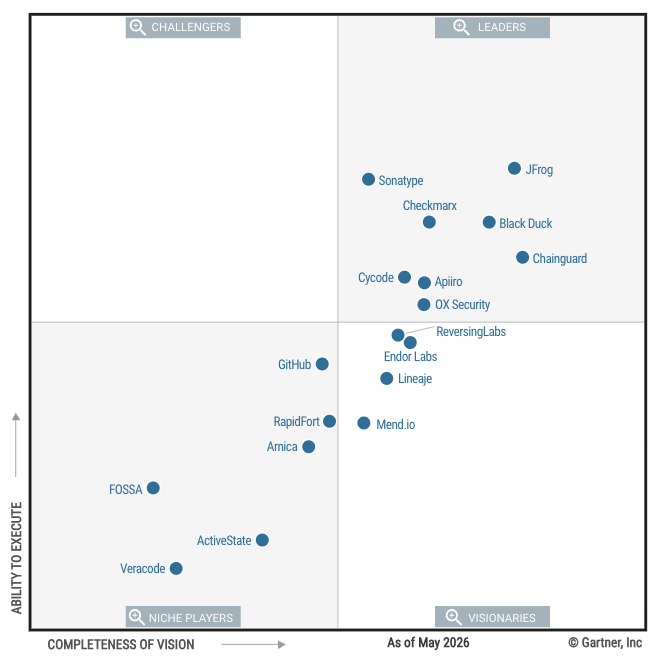
RapidFort Curated Images. RapidFort publishes tens of thousands of curated near-zero CVE images built on Ubuntu, Debian, Red Hat, and Alpine, hardened to NIST 800-70 and to STIG and CIS benchmarks, and FIPS 140-3 validated. They are drop-in replacements with coverage of minor and older versions, and they are part of a platform that continuously eliminates vulnerabilities, rather than a standalone catalog.
Yes. Minimus announced it is ending operations. A maintenance period began on August 24, 2026 and the Minimus registry is scheduled to shut down on October 22, 2026.
Echo announced on August 27, 2026 that it acquired key assets from Minimus, including technology, technical data, security integrations, and customer relationships. Echo is a separate company with its own catalog. The Minimus registry still goes offline on October 22, 2026.
No. Echo was founded in 2025 and builds its own hardened artifacts from source. It acquired Minimus assets after Minimus decided to wind down and has said it will use Minimus's operating system work to expand its own distribution coverage. Minimus images themselves stop updating on October 22.
Copies already cached on your nodes or mirrored to your own registry will keep running. Anything that pulls from the Minimus registry at deploy time, including a pod rescheduled to a fresh node, will fail. No further patches will ship, so the known-vulnerability count on those images grows as new CVEs are disclosed. Mirror anything you depend on before the date.
With RapidFort, no code changes and no re-baselining. Curated Images are drop-in replacements for upstream images, pin-for-pin compatible with existing CI/CD pipelines, so the pipeline change is the image reference. Plan a functional test pass when leaving a distroless base.
RapidFort provides FIPS 140-3 validated and STIG and CIS benchmarked images, with DoD Iron Bank support. Chainguard offers FIPS variants on its own validated provider with STIG hardening. Echo's images are FIPS-validated and STIG-hardened. Docker offers FIPS-validated and STIG-aligned variants on paid tiers.
Published windows: RapidFort remediates critical CVEs within 7 days and everything else within 14, including older versions. Chainguard publishes the same 7- and 14-day windows. Docker offers a 7-day critical SLA on Select and Enterprise tiers.
Yes. Docker Hardened Images Community is free under Apache 2.0. Minimus made its catalog free in its final months. RapidFort offers free community images alongside the subscription Curated Images catalog. Docker's free tier excludes FIPS, STIG, and SLA commitments.
Latest posts






Eliminate Attack Vectors at the Source
Continuously eliminate up to 99.9% of CVEs without code changes


Products
Use Case
Quicklinks
Stay in touch
Subscribe for product updates and RapidFort newsletter.
Address
440 North Wolfe Road, Sunnyvale, CA 94085


© 2026 RapidFort, Inc.
RapidFort, RAPIDFORT, and RBOM® are registered trademarks of RapidFort, Inc. All other marks and names mentioned herein may be trademarks of their respective companies.